Subchronic Toxicity Study of Nitric Oxide Nanobubble Injection in Sprague Dawley Rats
Dody Novrial, Nor Sri Inayati, Nur Signa Aini Gumilas, Dhadhang Wahyu Kurniawan dan Sutiman Bambang Sumitro
Abstract
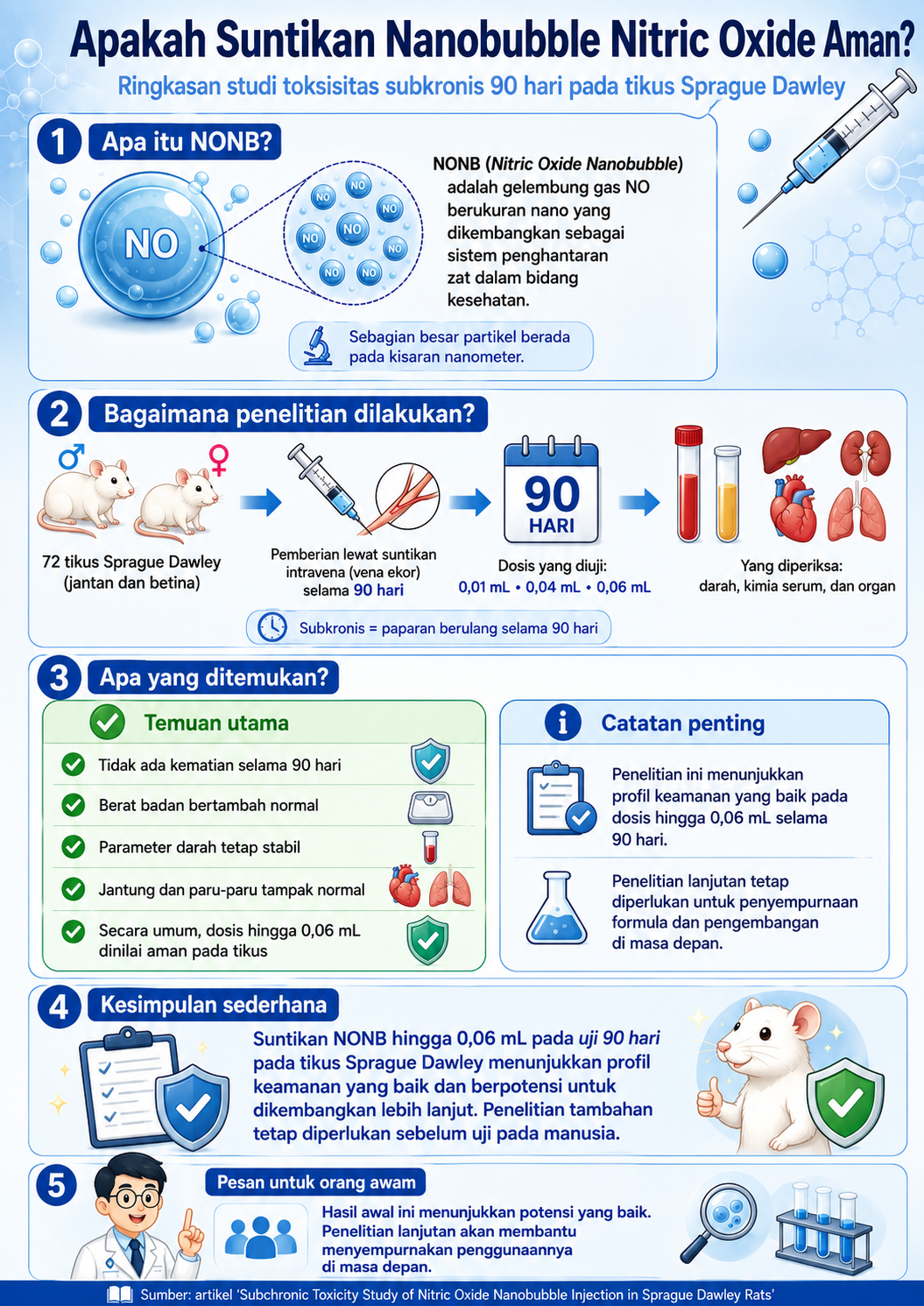
Objective: The development of nanobubble technology has expanded to various gas molecules, such as nitric oxide (NO). NO donors have been frequently used for both therapeutic and diagnostic purposes. However, the use of NO in nanoformulations has received little attention thus far. This research aimed to assess the subchronic toxicity of NO nanobubbles in a preclinical study design. Methods: Ninety days of subchronic toxicity testing based on modified OECD guidelines in Sprague Dawley rats was used in this study to assess potential adverse effects of intravenous administration of NO nanobubbles (NONBs). Hematological factors, serum biochemistry, and histology of the liver, kidney, heart, lung, and spleen were investigated. Results: The intravenous NONB injection trial using graded doses of 0.01 mL, 0.04 mL, and 0.06 mL resulted in no deaths during the 90-day treatment period. However, liver disturbance and electrolyte imbalance emerged. This condition was supported by histological findings in the liver and kidney, which showed potential reversible damage, and persistent hemorrhage of the spleen. Conclusions: Intravenous administration of NONBs at a dose of up to 0.06 mL in this subchronic toxicity test remains safe. Further studies with adjustments to the test formulation are highly encouraged before the clinical trial stage in humans.
Keywords: nitric oxide; nanobubble; toxicity study; nanotechnology
Article Link: https://www.mdpi.com/3915186