
Retrospective Evaluation of Intravenous Oxyhydrogen Nanobubble Therapy in Chronic Kidney Disease
Olly Indrajani, Christyanita Putri Ekasari, and Aditya Tri Hernowo
Abstract
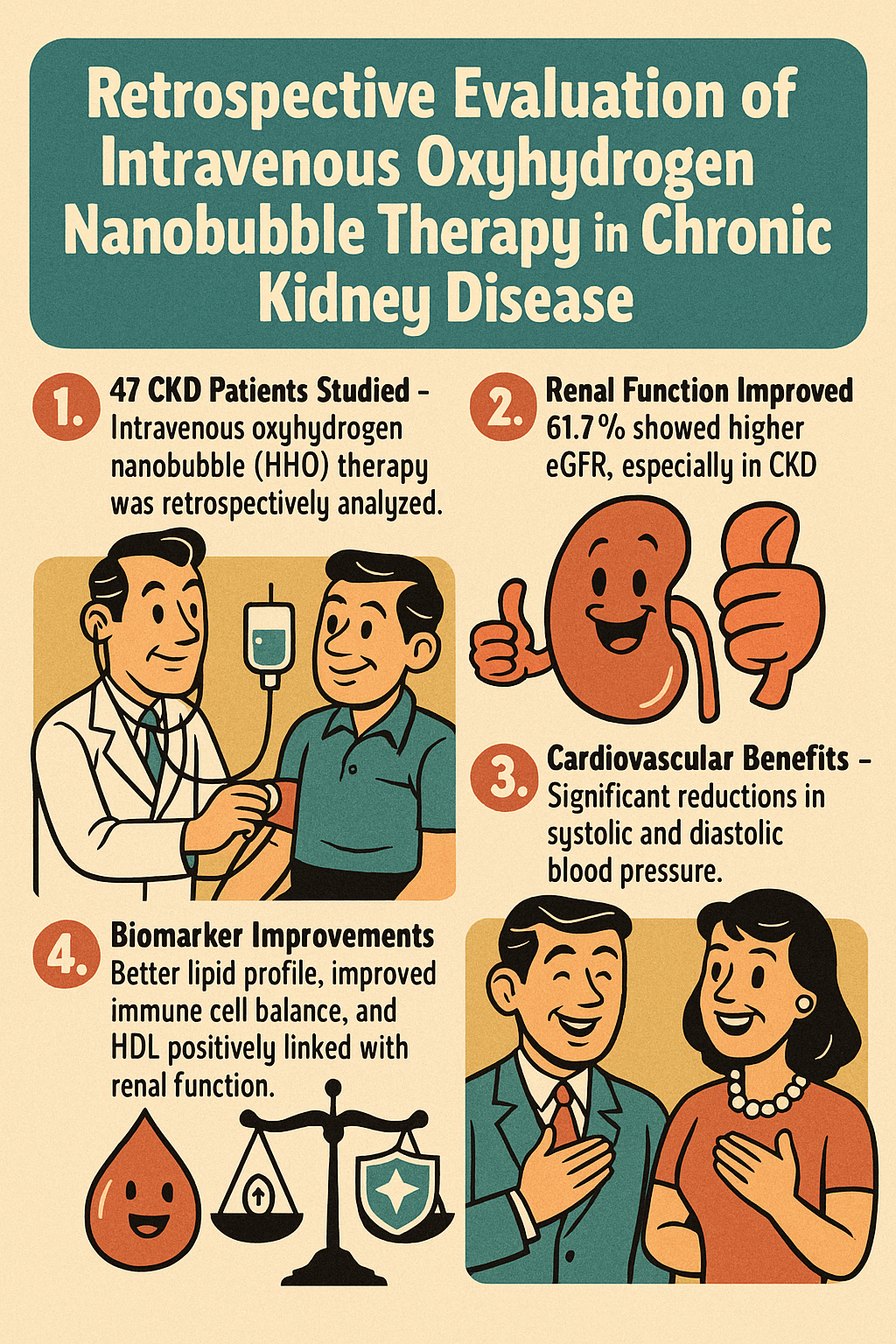
Background: Chronic kidney disease (CKD) remains a major global health burden, driven by oxidative stress, inflammation, and progressive nephron loss. Oxyhydrogen (HHO) nanobubble therapy has emerged as a novel intervention combining molecular hydrogen and oxygen with nanoscale delivery potential. This retrospective observational study evaluated the physiological effects of intravenous HHO nanobubble therapy in patients with CKD.
Methods: Data from 47 CKD patients who received intravenous HHO nanobubble therapy as part of routine clinical care were retrospectively analyzed. Baseline and follow-up data were collected from electronic medical records. Estimated glomerular filtration rate (eGFR) served as the primary outcome, with additional analyses on blood pressure, hematological markers, lipid profile, and metabolic parameters. Statistical tests included paired t-tests and Pearson correlation analysis.
Results: Following HHO therapy, 61.7% of patients showed improved eGFR, particularly those in CKD Stage III. Significant reductions in systolic (p < 0.001) and diastolic (p = 0.046) blood pressure were observed. Improvements were also noted in lymphocyte count, granulocyte percentage, red cell distribution width (RDW), and total cholesterol (p = 0.04). HDL showed a positive correlation with ΔeGFR (r = 0.54, p = 0.0018), suggesting a potential link between lipid metabolism and renal function.
Conclusion: This retrospective study suggests that intravenous HHO nanobubble therapy may support renal function and reduce cardiovascular-metabolic stress in patients with CKD, particularly in moderate stages. These findings warrant further investigation through prospective, controlled studies to confirm efficacy and explore mechanisms.
Keywords: chronic kidney disease; oxyhydrogen; nanobubble; estimated glomerular filtration rate; retrospective study; antioxidant; oxidative stress; nanomedicine
Link: https://www.preprints.org/manuscript/202509.1462/v1