
Reduction of Coronary Artery Stenosis Following Oxyhydrogen and Gasotransmitter Nanobubble Infusions: A Case Report
Dwimesta Fadryona,Christyanita P. Ekasari ,Subagjo
Abstract
Background: Evidence regarding intravenous therapeutic-gas nanobubbles incorporating hydrogen (H₂), oxygen (O₂), nitric oxide (NO), and other gasotransmitters in coronary artery disease (CAD) remains limited. Although conventional pharmacological and revascularization treatments improve outcomes, substantial regression of established coronary plaque remains difficult. Methods: Clinical records, examination findings, laboratory results, treatment documentation, imaging reports, and patient-reported outcomes were retrospectively reviewed.
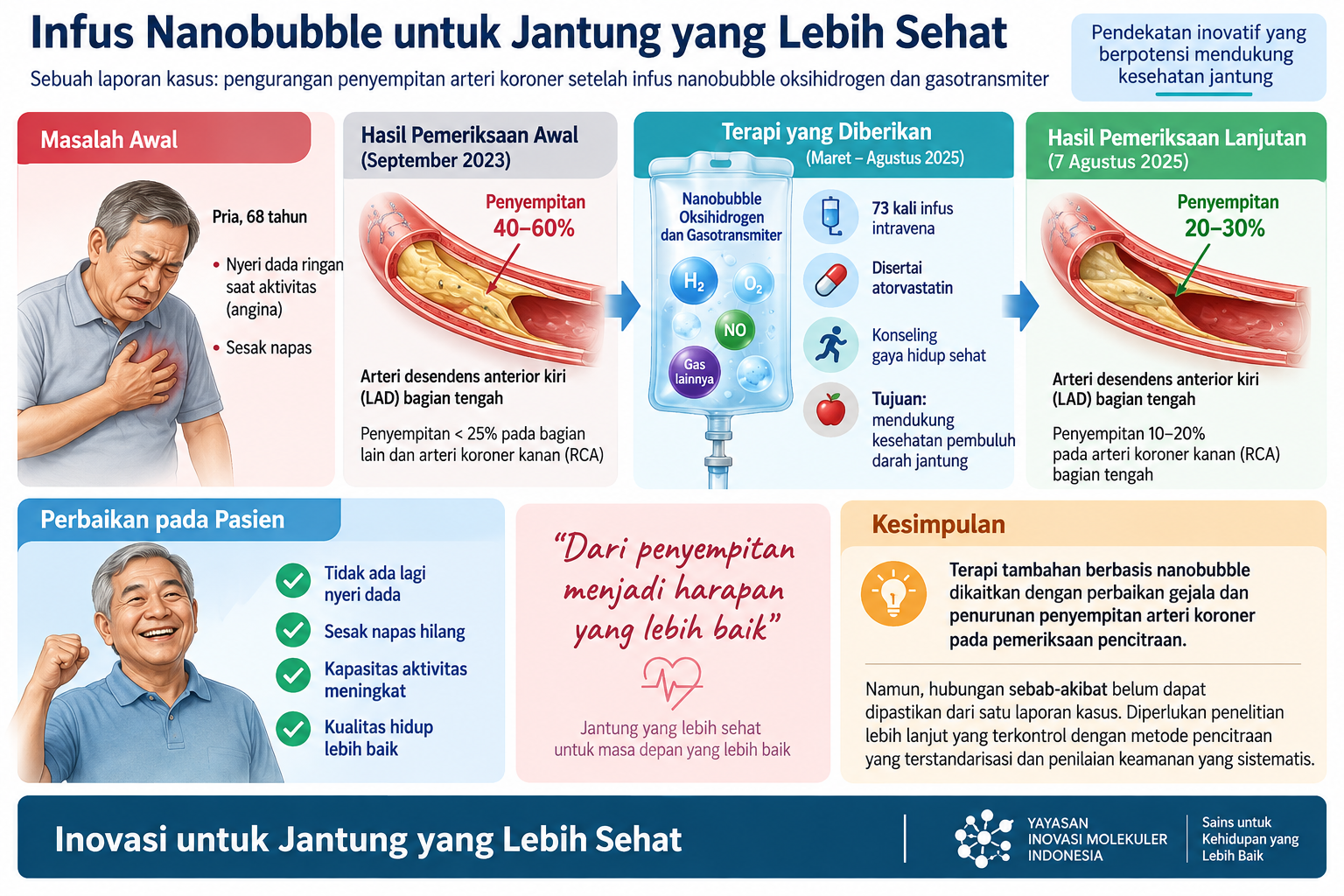
Case Presentation: A 68-year-old man with mild exertional angina and dyspnea had September 2023 coronary CT angiography showing 40–60% soft-plaque stenosis in the mid-left anterior descending artery (LAD) and less than 25% stenosis in the proximal and distal LAD and dominant right coronary artery (RCA). From March to August 2025, he received 73 intravenous infusions containing oxyhydrogen, nitric oxide, other gasotransmitters, and methylene blue, alongside atorvastatin and lifestyle counseling. Follow-up imaging on 7 August 2025 showed mid-LAD stenosis of 20–30% and mid-RCA stenosis of 10–20%. The patient reported symptom resolution and improved functional capacity.
Conclusions: This case documents a temporal association between adjunctive nanobubble-based therapy, symptomatic improvement, and lower estimated stenosis on serial coronary imaging. Causality cannot be established from a single uncontrolled observation, and controlled studies with standardized imaging and safety assessment are required.
Keywords: coronary artery disease, nanobubbles, oxyhydrogen, gasotransmitters, methylene blue, coronary CT angiography, case report
Article Link: https://www.preprints.org/manuscript/202609.0970