
Oxyhydrogen Nanobubbles: Why This Technology Is Becoming the Future of Regenerative Therapy
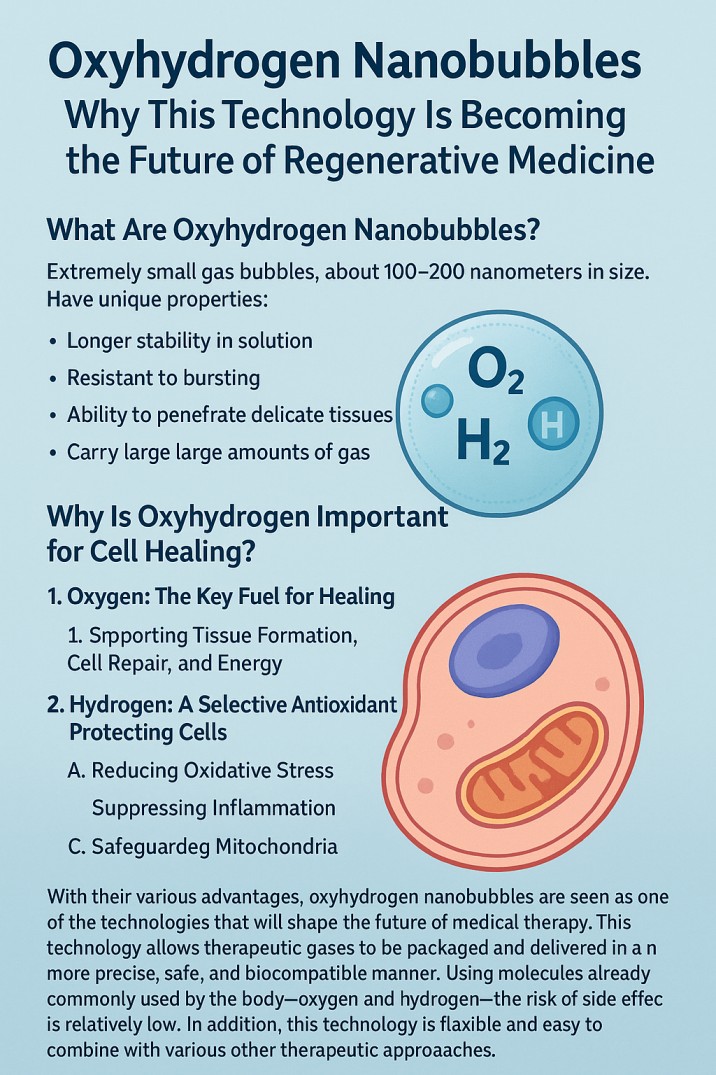
In recent years, gas-based therapies such as oxygen (O₂) and hydrogen (H₂) have gained growing attention among researchers in the field of regenerative medicine. Both molecules have been shown to play important roles in reducing inflammation, repairing damaged cells, and supporting the body’s natural healing processes.
However, one major challenge remains: gases are extremely difficult to control. They evaporate quickly, disperse rapidly, and often fail to reach the target tissues effectively. This is where oxyhydrogen nanobubble technology emerges as a breakthrough. It offers a safer, more stable, and more targeted way to deliver therapeutic gases into the body.
Oxyhydrogen nanobubbles are extremely small gas bubbles—only about 100–200 nanometers in size, which is smaller than most human cells. Because of their tiny scale, these bubbles behave very differently from ordinary gas bubbles. They can remain stable in liquids for long periods, resist collapsing, and spread easily into delicate tissues that are difficult to reach. Nanobubbles can also carry a comparatively large amount of gas relative to their size. When these bubbles are filled with a mixture of oxygen and hydrogen, an interesting synergy appears: oxygen supports cellular metabolism and energy production, while hydrogen functions as a selective antioxidant that neutralizes harmful free radicals. This combination makes oxyhydrogen nanobubbles an increasingly promising tool in regenerative therapies.
Why Is Oxyhydrogen Important for Cellular Healing?
1. Oxygen: The Primary Fuel for Tissue Repair
Oxygen is one of the most essential components in the body’s healing process. It supports the formation of new tissue, repairs damaged cells, and enables the production of ATP—the energy currency required for cellular activity. When a part of the body experiences injury or low oxygen levels (hypoxia), healing slows down significantly. Here, oxygen nanobubbles become especially valuable. Due to their nano-scale size, they can increase dissolved oxygen levels in targeted areas and help supply additional oxygen to tissues more effectively. Numerous studies show that oxygen delivered through nanobubbles can accelerate wound healing and reduce the risk of tissue necrosis.
2. Hydrogen: A Selective Antioxidant That Protects Cells
Unlike oxygen, hydrogen is known as the lightest gas in nature. Yet inside the body, it has a very specific and highly beneficial function: hydrogen selectively neutralizes harmful free radicals—such as hydroxyl radicals (•OH)—without interfering with other important physiological molecules. This selectivity makes hydrogen a safe and effective antioxidant. When used therapeutically, hydrogen helps reduce oxidative stress, suppress inflammation, and protect mitochondria—the cell’s energy center. These effects are particularly valuable for tissue recovery, especially in nerve and muscle cells. Early clinical studies have also shown potential benefits of hydrogen therapy for metabolic disorders, muscle injuries, and inflammatory conditions.
With these advantages, oxyhydrogen nanobubbles are increasingly viewed as a technology that will shape the future of medical treatment. They enable therapeutic gases to be packaged and delivered with greater precision, safety, and biological compatibility. Because they utilize molecules naturally used by the body—oxygen and hydrogen—the risk of unwanted side effects is relatively low. The technology is also flexible and can be easily combined with other therapeutic approaches. Many researchers believe that nanobubbles are paving the way toward a new generation of regenerative medicine that is more effective, personalized, and aligned with the body’s natural healing mechanisms.
Sources:
-
Ohta S. Molecular hydrogen as a novel antioxidant: overview of the advantages of hydrogen for medical applications. Methods Enzymol. 2015;555:289-317. Epub 2015 Jan 21. PMID: 25747486. https://doi.org/10.1016/bs.mie.2014.11.038
-
Ichihara, M., Sobue, S., Ito, M. et al. Beneficial biological effects and the underlying mechanisms of molecular hydrogen - comprehensive review of 321 original articles -. Med Gas Res 5, 12 (2015). http://ttps://doi.org/10.1186/s13618-015-0035-1