
Oxyhydrogen Nanobubbles: A New Approach to Fighting Liver Cancer
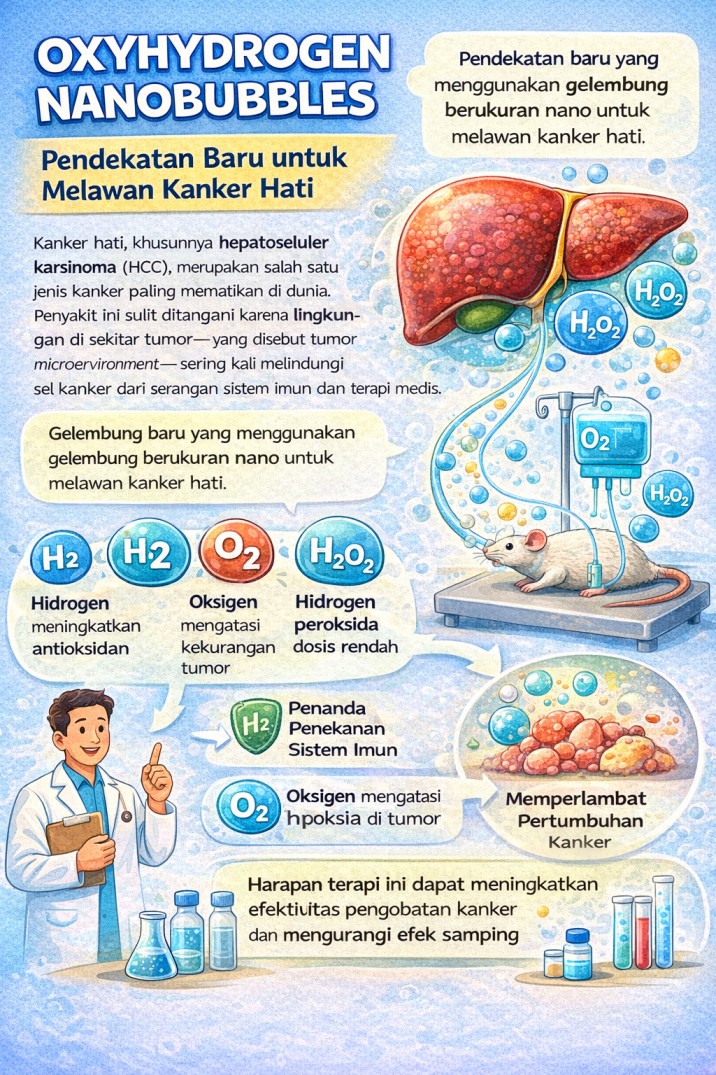
Liver cancer, particularly hepatocellular carcinoma (HCC), is one of the deadliest types of cancer worldwide. It is difficult to treat because the environment surrounding the tumor—known as the tumor microenvironment—often protects cancer cells from the body’s immune system and from medical therapies. In addition, standard treatments such as chemotherapy and radiation frequently cause significant side effects. A recent study from Universitas Brawijaya and Yayasan Inovasi Molekuler Indonesia (IMI) introduced a new gas-based medical approach called oxyhydrogen nanobubbles (HHOnbs). This technology combines hydrogen (H₂), oxygen (O₂), and very low-dose hydrogen peroxide (H₂O₂) inside nanoscale bubbles that can be administered through intravenous infusion.
What Are Oxyhydrogen Nanobubbles?
Oxyhydrogen nanobubbles are extremely tiny gas bubbles—smaller than one micrometer, or far smaller than the diameter of a human hair. Because of their very small size, these bubbles can travel through the bloodstream, enter small blood vessels, and reach tumor tissue more effectively than ordinary gas delivery. In the study conducted on a rat model of liver cancer, the nanobubbles were administered intravenously so they could circulate directly throughout the body.
Each tiny bubble carries a combination of three active components: hydrogen, oxygen, and hydrogen peroxide at a very low dose. Hydrogen is known to help reduce oxidative stress and support the body’s antioxidant system. Oxygen helps address hypoxia—a condition of low oxygen levels inside tumor tissue that often makes cancer more aggressive and resistant to treatment. Meanwhile, low concentrations of hydrogen peroxide can influence the cell growth cycle. Together, these three components are designed to work synergistically within the tumor environment, aiming to suppress cancer cell growth and improve the surrounding microenvironment.
What Happens to Cancer Cells?
To understand the therapy’s effects, researchers examined two important biological markers in liver tissue. The first marker was FoxP3, a protein found in certain immune cells known as regulatory T cells (Tregs). Under normal conditions, these cells help maintain immune balance. However, in liver cancer, high levels of FoxP3-positive cells can actually protect the tumor from immune attack. The higher the FoxP3 level, the more aggressive the tumor tends to be. Interestingly, in the group treated with oxyhydrogen nanobubbles (HHOnbs), FoxP3 levels decreased significantly compared to untreated cancer groups. This suggests that the tumor environment became less immunosuppressive, giving the body a better chance to fight cancer cells.
The second marker evaluated was Ki-67, a protein that indicates how quickly cancer cells are dividing and growing. Ki-67 is commonly used to assess tumor aggressiveness—the higher the level, the faster the cancer grows. In this study, HHOnbs therapy significantly reduced Ki-67 levels. This means that cancer cell division and growth slowed down. In other words, the therapy not only improved immune response around the tumor but was also directly associated with suppressing cancer cell proliferation.
Why Is This Gas Combination Interesting?
The combination of three gases within a single nanobubble system is particularly interesting because each component plays a different but complementary biological role. Hydrogen can enhance antioxidant activity and support immune cell function. Oxygen helps overcome tumor hypoxia, a condition that makes cancer more aggressive and more resistant to therapy. Low-dose hydrogen peroxide can influence cancer cell cycle regulation. When combined within a nanoscale bubble, their effects may be stronger than when used separately. Moreover, the nanoscale size allows for more precise movement through small blood vessels and more targeted delivery to tumor tissue, potentially minimizing side effects on healthy tissues.
The study results showed that intravenous administration of HHOnbs reduced immunosuppressive factors in the tumor environment while slowing cancer cell growth. These findings provide a scientific basis suggesting that nano-scale gas-based therapy could become a new approach in liver cancer treatment. However, it is important to emphasize that this research is still in the preclinical stage, conducted in animal models. Further studies are needed to compare its effectiveness with standard therapies and to ensure safety and benefits in humans. Nevertheless, this approach opens the door to more precise cancer therapies, with the hope of improving treatment effectiveness while reducing the side effects that have long been a major challenge in cancer care.
Source:
Zahrah, N. A., Widyarti, S., Wuragil, D. K., Riawan, W., Indrajani, O., Lubab, A., Hernowo, A. T., Sumitro, S. B., & Aulanni’am. (2026). Oxyhydrogen nanobubbles suppress FoxP3 and Ki-67 expression in a Wistar rat model of hepatocellular carcinoma. Jurnal Penelitian Pendidikan IPA, 12(1), 771–780.https://doi.org/10.29303/jppipa.v12i1.13858