Oxyhydrogen Nanobubble and Gasotransmitter Therapy with Controlled Potassium for Restoring Electrolyte Balance and Microcirculation in End-Stage Renal Disease
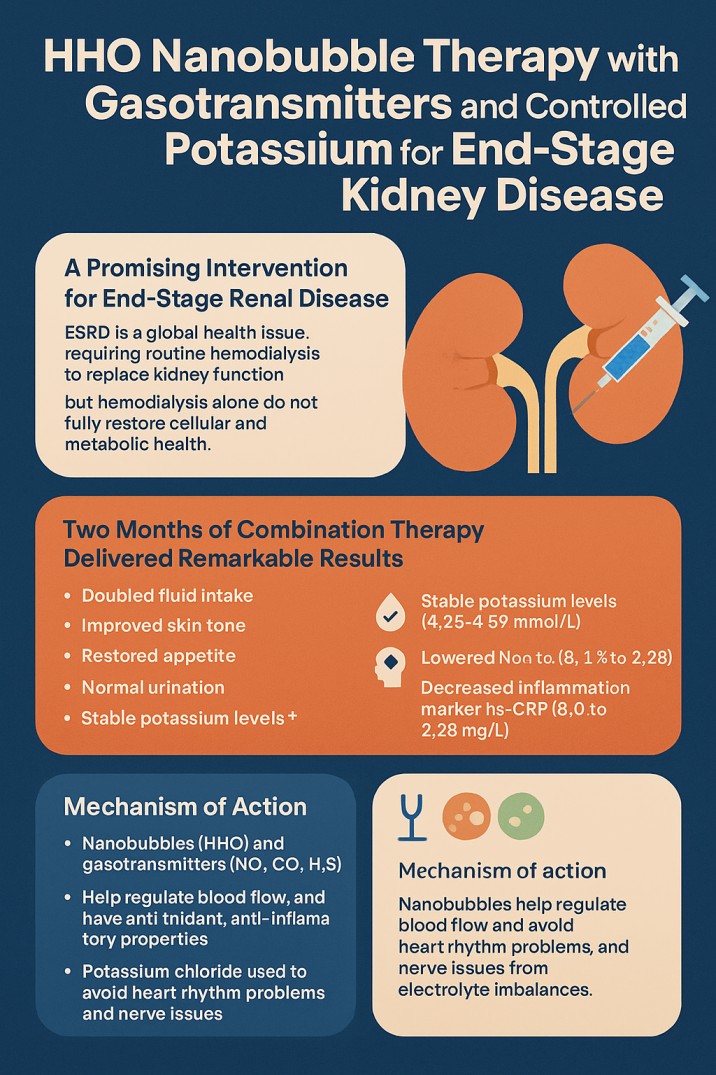
Chronic kidney disease (CKD) stage 5, also known as end-stage renal disease (ESRD), is one of the most serious health problems worldwide. At this stage, the kidneys can no longer function properly, requiring patients to undergo regular hemodialysis—a medical procedure to cleanse the blood when the kidneys can no longer do so. While hemodialysis is effective at removing toxins and excess fluid from the body, it does not fully address cellular-level damage or the metabolic disturbances that occur.
A case report from the Institut Molekul Indonesia introduces a promising new approach: intravenous infusion of oxyhydrogen nanobubbles and gasotransmitters (NO, CO, H₂S) combined with potassium chloride (KCl) administered gradually according to the patient’s condition. This therapy is designed to improve blood flow in the smallest vessels (microcirculation), stabilize electrolyte levels, reduce inflammation, and suppress oxidative stress—all of which are factors that often worsen kidney disease.
Noticeable Improvements After Two Months of Combination Therapy
A 63-year-old male patient with stage 5 CKD, a history of type 2 diabetes, and uncontrolled hypertension underwent hemodialysis twice a week. From April to June 2025, he received 21 additional therapy sessions consisting of intravenous oxyhydrogen nanobubbles, gasotransmitters (NO, CO, H₂S), and potassium chloride (KCl), administered after each dialysis session. Before starting therapy, the patient’s condition significantly limited his activities. He was restricted to a maximum fluid intake of 200 ml per day because his body could not manage excess fluids. He had darkened skin, particularly on the face and legs, as a sign of impaired blood circulation in small vessels. After each dialysis session, he often felt very fatigued and experienced a loss of appetite, affecting his daily nutrition.
After two months, the results were remarkable. His fluid intake capacity doubled to 400 ml per day without signs of fluid overload. His skin tone improved, appetite returned, and urination frequency normalized—signs of better fluid regulation in the body. Laboratory tests supported these observations. Blood potassium levels, initially at 3.95 mmol/L, stabilized within the physiological range (4.25–4.59 mmol/L). His three-month average blood sugar (HbA1c) dropped from 8.1% to 6.69%, and inflammatory markers (hs-CRP) decreased significantly from 8.0 to 2.28 mg/L. Throughout the therapy, no adverse side effects were reported. These findings suggest that the combination of nanobubbles, gasotransmitters, and KCl is not only safe but also delivers tangible benefits to patient quality of life within a relatively short time.
Why Nanobubbles, Gasotransmitters, and KCl?
Oxyhydrogen nanobubbles (HHO) and gasotransmitters such as nitric oxide (NO), carbon monoxide (CO), and hydrogen sulfide (H₂S) are gaseous molecules naturally produced by the body. They play crucial roles, including protecting blood vessels, reducing inflammation, and preventing damage from free radicals (antioxidants). These molecules also help regulate the dilation and constriction of blood vessels, maintain kidney blood flow, and stabilize the chemical balance within cells.
In kidney failure patients—especially those with diabetes and high blood pressure—gasotransmitter function is often impaired. For example, reduced H₂S levels can increase oxidative stress, cause chronic inflammation, and reduce vessel elasticity. Studies have shown that supplementing H₂S externally can help restore kidney blood flow, regulate electrolyte balance, and protect kidney tissue from damage. Meanwhile, NO and CO are known to have vasodilatory and cell-protective effects, working synergistically with H₂S to maintain healthy microcirculation in the kidneys.
Potassium chloride (KCl), on the other hand, is essential for maintaining electrolyte balance and the body’s electrical functions. CKD patients undergoing dialysis often experience fluctuations in blood potassium levels. If potassium is too low (hypokalemia), it can cause muscle weakness, irregular heartbeats, and nerve dysfunction. Conversely, high potassium (hyperkalemia) poses a serious risk of fatal arrhythmias. By administering KCl in gradually adjusted doses based on laboratory results and patient condition, potassium levels can be maintained within the normal range. Balanced potassium is vital for muscle contraction, nerve function, stable heart rhythm, and overall cell activity.
Although these results come from a single case report, the observed benefits suggest that a combination of nanobubble, gasotransmitter, and controlled KCl therapy could be a safe and effective complement for end-stage kidney disease patients undergoing hemodialysis. Further research with larger participant groups and controlled trials is needed to confirm its effectiveness, safety, and establish standardized treatment protocols. If proven, this approach could allow kidney failure patients not only to survive with dialysis but also to enjoy a better quality of life.
Source:
Dewi, A. T. K., & Hernowo, A. T. (2025, July 31). Restoration of electrolyte homeostasis and microcirculatory perfusion in end-stage renal disease via intravenous oxyhydrogen and gasotransmitter nanobubble therapy combined with potassium titration: A case report [Preprint]. Preprints. https://doi.org/10.20944/preprints202507.2558.v1