New Hope for Patients with Coronary Stenosis: Hydrogen-Oxygen Nanobubble Therapy
What Is Coronary Stenosis and Why Is It Dangerous?
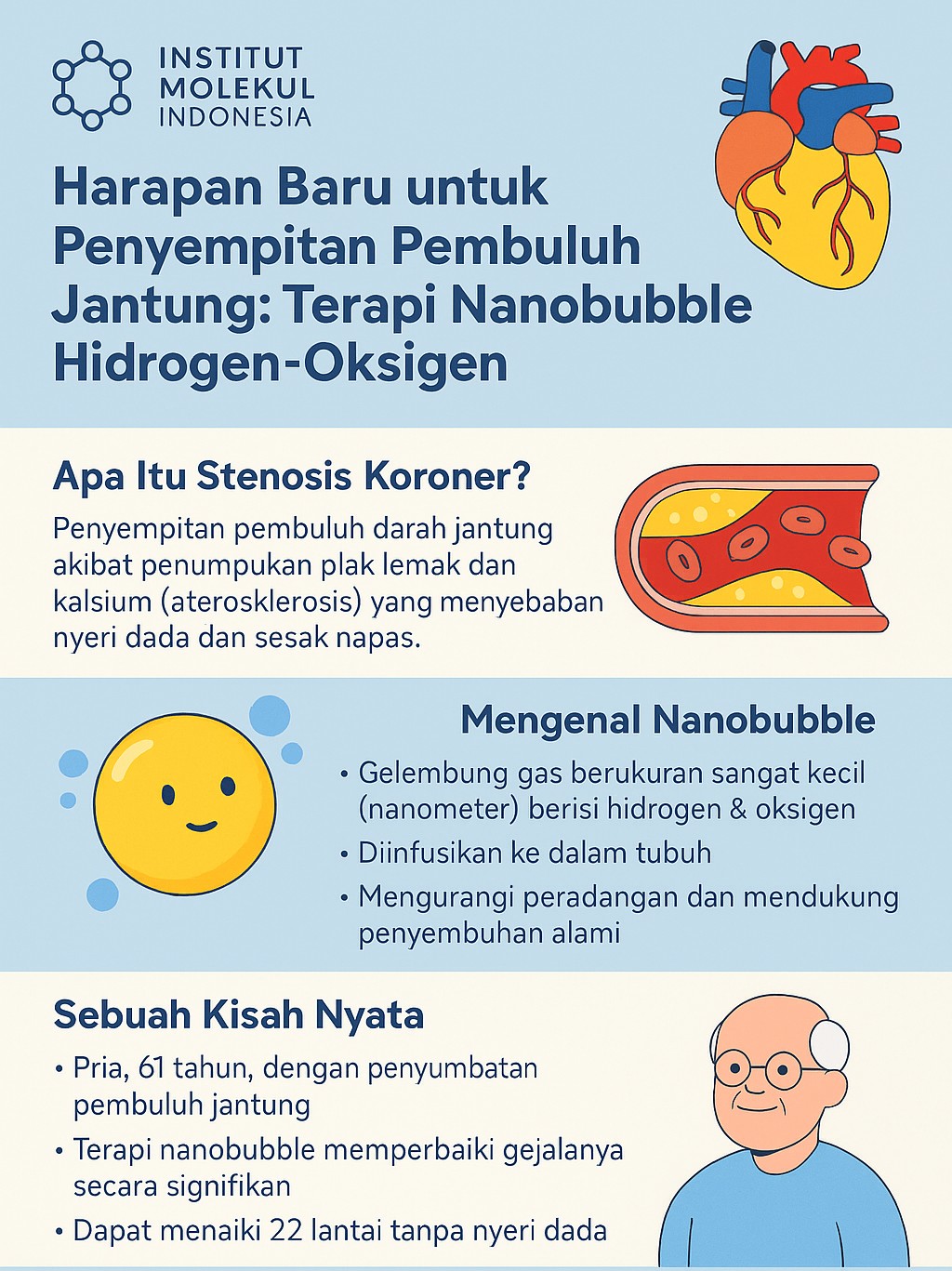
Coronary stenosis is a condition where the heart’s blood vessels become narrowed due to the buildup of fatty deposits and calcium (known as atherosclerosis). This narrowing restricts the flow of oxygen-rich blood to the heart muscle, which can cause chest pain, shortness of breath, and even lead to heart attacks. Treatment typically involves a combination of a healthy lifestyle, medications, or invasive procedures such as stent placement or coronary bypass surgery (CABG). However, all these methods come with limitations and risks. Now, a promising new technology has emerged—nanobubbles, tiny tools in the fight against heart disease.
Understanding Nanobubbles: Tiny Bubbles That Enter Capillaries
Nanobubbles are ultra-small gas bubbles, measuring in nanometers (a millionth of a millimeter). In this therapy, nanobubbles filled with hydrogen and oxygen gases are infused directly into the body. Their tiny size allows them to pass through even the smallest blood vessels without blocking circulation. Hydrogen acts as a powerful antioxidant, helping to reduce harmful free radicals and inflammation. Meanwhile, oxygen plays a vital role in tissue repair, especially in areas that lack sufficient blood supply. Together, these gases may help repair damaged blood vessels and reduce plaque buildup that causes narrowing.
A Real-Life Story: Step-by-Step Recovery from Heart Disease
A 61-year-old man who previously underwent bypass surgery for severe coronary narrowing began experiencing symptoms again—shortness of breath, coughing, and reduced stamina. When conventional treatments no longer brought improvement, he tried a new therapy using hydrogen-oxygen nanobubble infusion. The results were remarkable: within a few months, the patient was able to climb 22 floors without shortness of breath. His coughing disappeared, his blood pressure stabilized, and ultrasound (echocardiography) showed that his heart function had returned to normal.
How Does It Work?
Researchers believe that nanobubbles work through several interconnected mechanisms that support the healing of narrowed heart blood vessels. First, nanobubbles help reduce oxidative stress, a condition where the body produces excess free radicals that can damage the inner walls of blood vessels. This type of damage is often the starting point for plaque buildup and blockages.Second, nanobubbles help improve endothelial function, referring to the innermost lining of blood vessels. A healthy endothelium is essential for maintaining flexible vessels, ensuring smooth blood flow, and preventing the formation of blood clots. Third, nanobubbles have anti-inflammatory effects, meaning they can reduce inflammation that typically occurs around plaques or damaged areas in the vessels. By reducing inflammation, tissue healing becomes more efficient and the risk of complications decreases. Fourth, nanobubbles carry extra oxygen, which is especially beneficial for body tissues—particularly the heart—that suffer from reduced blood supply. With oxygen that’s easier to absorb, oxygen-deprived tissues can begin functioning better.
Overall, nanobubbles not only deliver therapeutic agents but also help improve the cellular environment, allowing the body to carry out its natural healing processes more effectively. Although this technology is still relatively new and requires more research, nanobubbles are a highly promising non-invasive therapy that can be easily administered via infusion, with minimal side effects. As such, they may become a valuable complement—or even an alternative—to current treatments for coronary artery disease.
What Does This Mean for Us?
For the general public, this is an encouraging sign that heart disease treatment is evolving toward more precise, safer, and nature-aligned therapies. While nanobubbles may not replace major medical procedures, they offer an exciting supplementary therapy that could greatly enhance patients’ quality of life.
Reference
Hernowo, A. T., Pardosi, J. C., Subagjo, S., Dewi, A. T. K., & Sumitro, S. B. (2024). Partial reversal of coronary stenosis with intravenous hydrogen and oxygen nanobubble administration: A case report. Preprints.org. https://doi.org/10.20944/preprints202406.1488.v1