
Hydrogen-Oxyhydrogen Nanobubble Therapy: A New Hope for Chronic Kidney Disease Patients
Hydrogen-Oxyhydrogen Nanobubble Therapy: A New Hope for Chronic Kidney Disease Patients
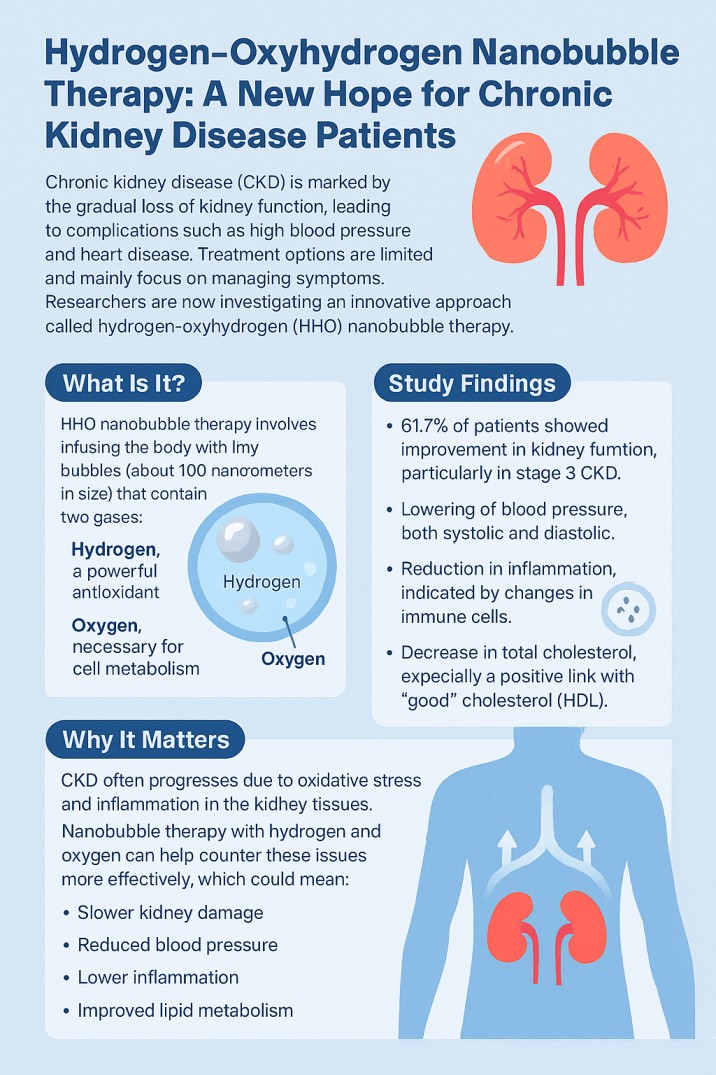
Chronic kidney disease (CKD) is one of the major global health problems. It is characterized by a gradual decline in kidney function, often leading to serious complications such as high blood pressure, metabolic disorders, and increased risk of heart disease. Until now, CKD treatment has been limited to controlling symptoms and slowing kidney damage, through medication, diet, or dialysis. For this reason, researchers continue to explore new therapies that can improve patients’ quality of life. One of the latest innovations under investigation is hydrogen-oxyhydrogen (HHO) nanobubble therapy. This technology combines two important gases: hydrogen, known as a powerful antioxidant, and oxygen, which is essential for cellular metabolism. Both gases are encapsulated in nano-sized bubbles (around 100 nanometers), allowing them to penetrate tissues more effectively and act directly at the cellular level.
What Did the Study Find?
In this study, 47 patients with CKD received intravenous HHO nanobubble therapy. The results were encouraging. More than half of the patients—61.7%—showed improvement in kidney function, especially those in the intermediate stage of the disease (stage III). Kidney function was assessed using eGFR, a key indicator of the kidneys’ ability to filter waste from the blood. The therapy also had a significant impact on blood pressure. Both systolic and diastolic blood pressure decreased after several sessions of treatment. This is important, as high blood pressure is not only a common complication of CKD but also a factor that can accelerate kidney damage if uncontrolled.
Positive changes were also observed in blood tests. The number of lymphocytes (protective immune cells) increased, while granulocytes—immune cells often linked to chronic inflammation—decreased. This shift indicates a reduction in inflammation, which is known to worsen CKD progression. In addition, changes in red blood cell distribution width (RDW) suggested signs of recovery within the body. In terms of lipid profile, total cholesterol levels decreased after therapy, which is relevant since CKD patients are at higher risk of metabolic and cardiovascular problems. Interestingly, HDL—often called “good cholesterol”—was positively correlated with improved kidney function, suggesting that better lipid metabolism may also support kidney health. After several therapy sessions, some patients experienced a shift in CKD stage. Patients who had previously been in advanced stage IV moved into the intermediate stage III. The data in the article showed fewer patients remaining in stage IV and more in stage III after undergoing HHO nanobubble therapy. This suggests that the therapy may not only slow kidney decline but also, in some cases, improve conditions that had already worsened.
Why Is This Important?
CKD often worsens due to oxidative stress and chronic inflammation in kidney tissues. These conditions cause cell damage, fibrosis (scarring), and a gradual loss of kidney function. Hydrogen in nanobubbles acts as an antioxidant that reduces oxidative stress, while oxygen supports cell metabolism to remain stable. Thanks to their extremely small size, nanobubbles can deliver both gases more effectively into kidney tissue. The benefits of this therapy go beyond kidney protection alone. Overall, the findings show that HHO nanobubble therapy provides multi-dimensional benefits: slowing kidney damage, lowering blood pressure, reducing inflammation, and improving lipid metabolism. This combination makes the therapy a promising new strategy in CKD management.
However, the current findings are still preliminary, as they are based on retrospective patient data without a control group. Even so, the positive outcomes offer hope that HHO nanobubble therapy could become a complementary option in CKD treatment. The next step will be larger, controlled clinical trials to confirm safety, effectiveness, and better understand the underlying mechanisms. If successful, nanobubble technology could become part of the future of kidney disease treatment—more effective, with fewer side effects, and improving patients’ overall quality of life.
Source:
Indrajani, O., Ekasari, C. P., & Hernowo, A. T. (2025). Retrospective evaluation of intravenous oxyhydrogen nanobubble therapy in chronic kidney disease. Preprints, 2025091462. https://doi.org/10.20944/preprints202509.1462.v1