
Hydrogen Nanobubble Therapy and Chronic Coronary Artery Disease: Lessons from a Case Report
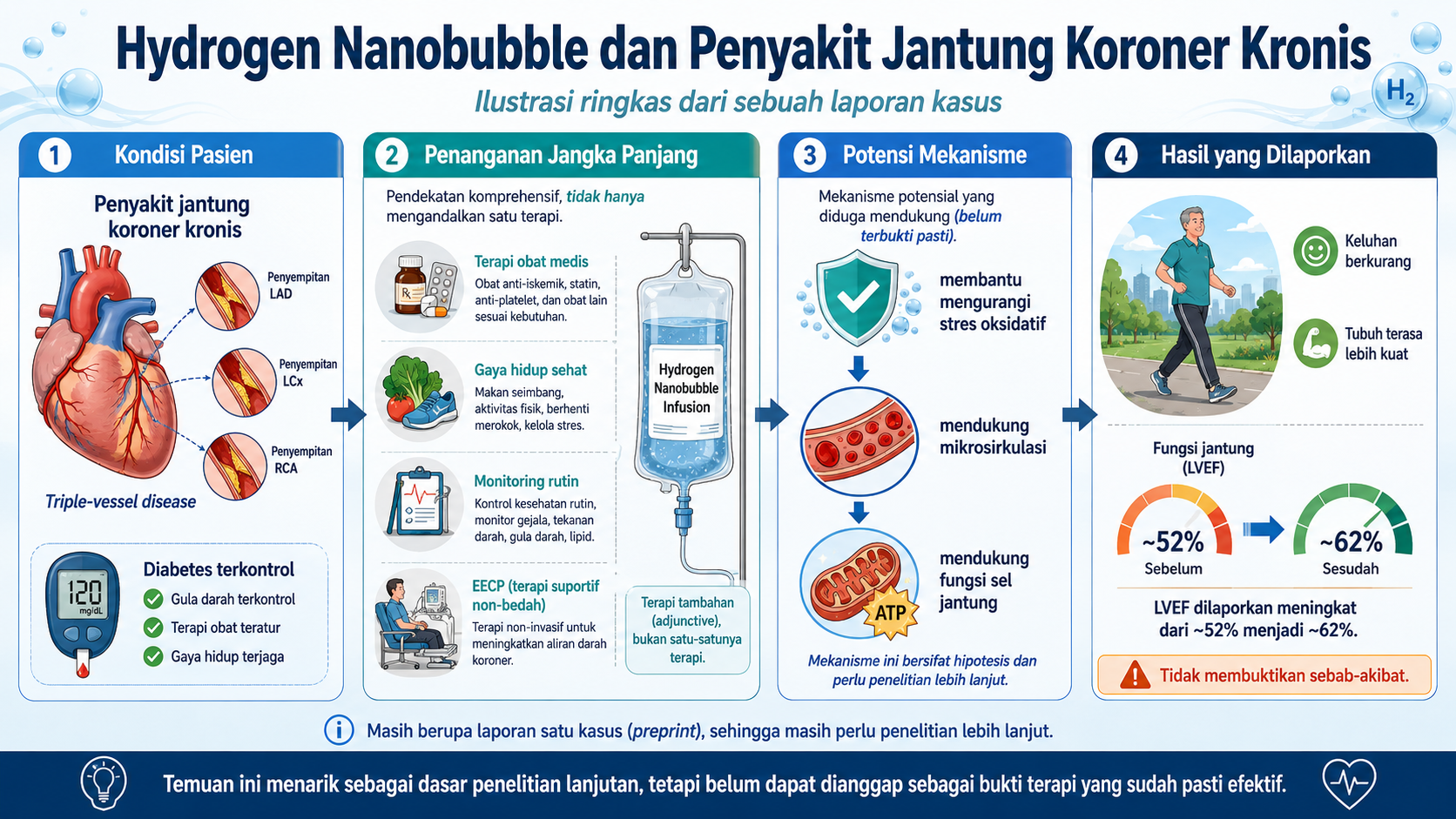
Coronary artery disease occurs when the blood vessels that supply blood to the heart muscle become narrowed or blocked. When this problem affects the three main coronary arteries, the condition is known as triple-vessel disease. This is a serious condition, especially when accompanied by diabetes mellitus, because diabetes can worsen blood vessel health and increase the risk of impaired heart function. The scientific article discussed in this blog reports the case of a 67-year-old man with chronic coronary artery disease, a history of old myocardial infarction, triple-vessel disease, and controlled diabetes mellitus. In 2012, coronary angiography showed severe narrowing and blockage in several coronary arteries. Coronary artery bypass grafting, or CABG, was recommended, but the patient chose not to undergo surgery.
After that, the patient underwent long-term conservative management. This approach included medication, lifestyle modification, routine monitoring, and several non-surgical adjunctive therapies such as Enhanced External Counterpulsation or EECP, laser therapy, and chelation infusion. For more than a decade, the patient was reported to remain relatively stable, although he still experienced fatigue and shortness of breath when walking long distances or performing heavy physical activity. One of the interesting aspects of this case report is the use of Hydrogen Nanobubble Infusion Therapy as an adjunctive therapy. This therapy uses hydrogen in the form of nanobubbles, which are extremely small gas bubbles that can be dispersed in liquid. In biomedical science, molecular hydrogen has been widely studied because of its potential to help reduce oxidative stress, a condition in which excessive free radicals can damage cells and tissues.
In chronic coronary artery disease, oxidative stress, dysfunction of small blood vessels, inflammation, and mitochondrial impairment may all affect the performance of the heart muscle. For this reason, hydrogen-based therapy is an interesting area of research as a supportive approach that may help protect heart cells. However, this therapy is not intended to open blocked blood vessels in the way that bypass surgery or stent placement does. In the case report, the patient underwent 12 sessions of Hydrogen Nanobubble Infusion Therapy. After the therapy, the patient reported feeling physically stronger, with improvement in shortness of breath during heavier activity or long-distance walking. A follow-up evaluation also reportedly showed an increase in left ventricular ejection fraction, or LVEF, from approximately 52% to approximately 62%. LVEF is a measure of how well the left ventricle of the heart pumps blood to the rest of the body.
Although these findings are interesting, they must be interpreted carefully. This article is a single case report and is still a preprint, meaning it has not yet undergone peer review. Therefore, it cannot prove that Hydrogen Nanobubble Infusion Therapy directly caused the improvement in heart function. Changes in the patient’s condition may have been influenced by many factors, including medication, other long-term therapies, lifestyle, variation in examination methods, or the combined effects of multiple interventions. The main value of this case report is that it provides a basis for further research. The findings may serve as an early indication that hydrogen nanobubble therapy deserves more structured investigation, especially in patients with chronic ischemic heart disease. Future studies should involve more patients, comparison groups, consistent cardiac function assessments, symptom evaluation, physical activity capacity, biomarkers, endothelial function, and safety monitoring.
For the general public, the key message is that chronic coronary artery disease requires comprehensive management. Medication, diabetes control, a healthy diet, appropriate physical activity, and regular medical monitoring remain the main foundation of care. New therapies such as Hydrogen Nanobubble Infusion Therapy still require stronger scientific evidence before they can be considered broadly effective. With further and more standardized research, Hydrogen Nanobubble Infusion Therapy may become one area of innovation in supportive therapy for chronic heart disease. However, at present, this approach should be understood as an exploratory therapy that still needs to be studied in greater depth.
Source:
Yudhanata, R., Ekasari, C. P., & Subagjo. (2026). Clinical improvement and recovery of systolic function in chronic triple-vessel coronary artery disease with controlled diabetes mellitus after long-term conservative management and adjunctive hydrogen nanobubble infusion therapy: A case report. Preprints.org. https://doi.org/10.20944/preprints202609.0114.v1