
High Unemployment of College Graduates: Time to Build Innovation-Based Industry
13:14, 07 January 2025 by admin
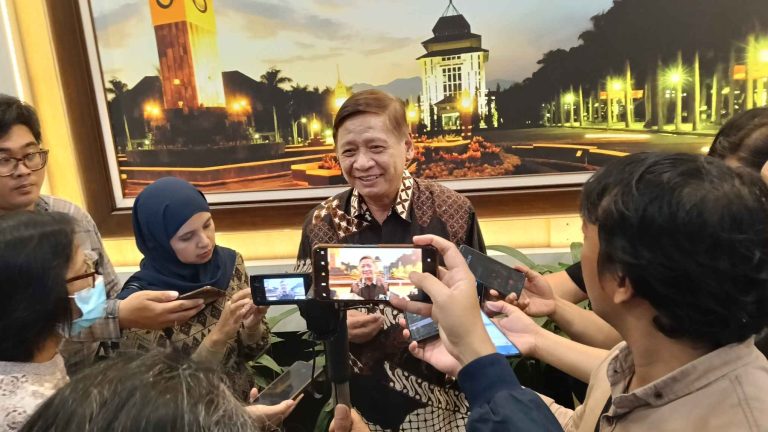
Malang, January 5, 2025 – The high unemployment rate among college graduates is a serious problem facing Indonesia. Prof. Drs. Sutiman Bambang Sumitro, SU., D.Sc., a lecturer in Biology at Brawijaya University (UB), expressed his concern regarding this situation. Based on BPS data from August 2024, there were more than 842 thousand higher education graduates, from undergraduate to doctoral, who had not been absorbed into the workforce. "Ironically, this unemployment is actually higher at the college level compared to other levels of education such as elementary, junior high, or high school," said Prof. Sutiman.
According to Prof. Sutiman, this problem is rooted in Indonesia's limitations in transforming into an industrial country. Currently, many domestic industrial sectors only act as extensions of foreign companies because they depend on foreign licenses. As a result, the synergy between universities and the industrial sector has not been well established. "Indonesia is still in a position as a market country, especially in the pharmaceutical and health sectors. In fact, strong industrial transformation is the key to optimally utilizing college graduates," he added.
In addition, Prof. Sutiman also expressed his disappointment with the fate of university research results that are not implemented in the real world. Many patents are only academic documents for promotion without having a significant impact on society. "Those patents feel like they are 'patented' or killed, just becoming piles of documents without sustainability," he complained. This shows the need for a new approach in managing research results so that they do not just stop on paper.
As one of the innovative steps, Prof. Sutiman and his community developed nano bubbles technology, nano-sized gas bubbles that can improve the quality of life, especially for individuals with degenerative diseases. Through the Indonesian Molecule Institute (IMI) research institute and the Reverse Aging & Homeostasis (RAHO) Club community, he has involved more than 15,000 members who are beneficiaries and supporters of the sustainability of the research. "We focus on increasing the supply of important gases in the body, which are often problematic for those who are aging or suffer from chronic diseases," he explained.
Prof. Sutiman hopes the government can learn from countries like China, which has successfully integrated academic research with market needs through synergy between universities and the industrial sector. "China continues to catch up with the United States in mastering technology and applied science, because there is a good working relationship between academics and industry players," he said. He emphasized that Indonesia could also move in a similar direction, as long as the government, academics, and industry unite to build a strong, innovative, and sustainable industrial foundation.
News sources:
https://surabaya.kompas.com/read/2025/01/05/140837478/curhat-dosen-ub-banyak-lulusan-mahasiswa-menganggur-dan-produk-riset-tak#google_vignette
https://malangpariwara.com/2025/01/05/prof-drs-sutiman-bambang-sumitro-su-d-sc-indonesian-belum-sepenuhnya-menjadi-negara-industri/